
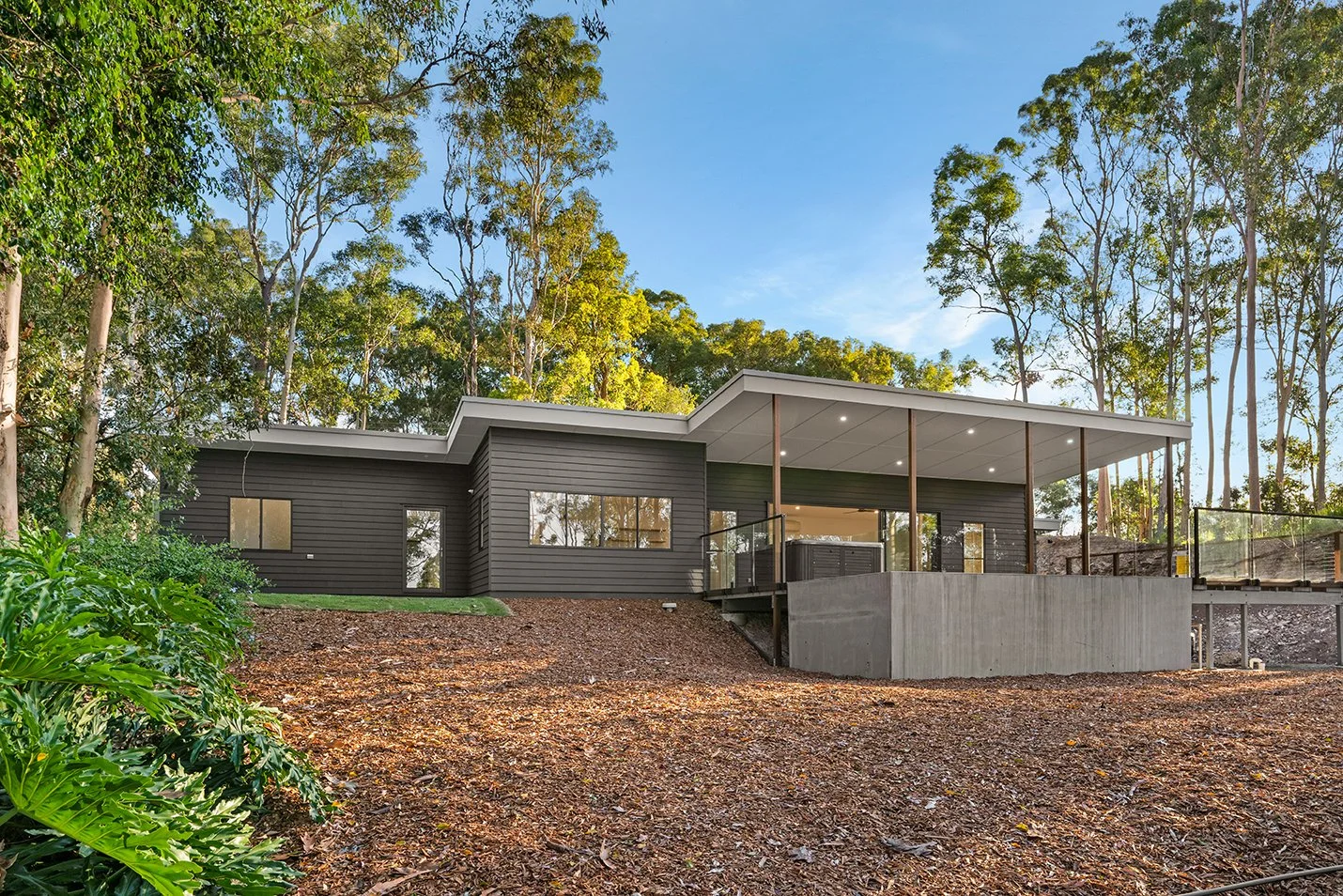
Passive House
The next evolution in home construction.
Passive House is not just a home; it's a concept that redefines comfort, sustainability, and efficiency. By leveraging advanced techniques like insulation, airtightness, and ventilation systems with heat recovery, Passive House ensures optimal thermal comfort with minimal heating and cooling.
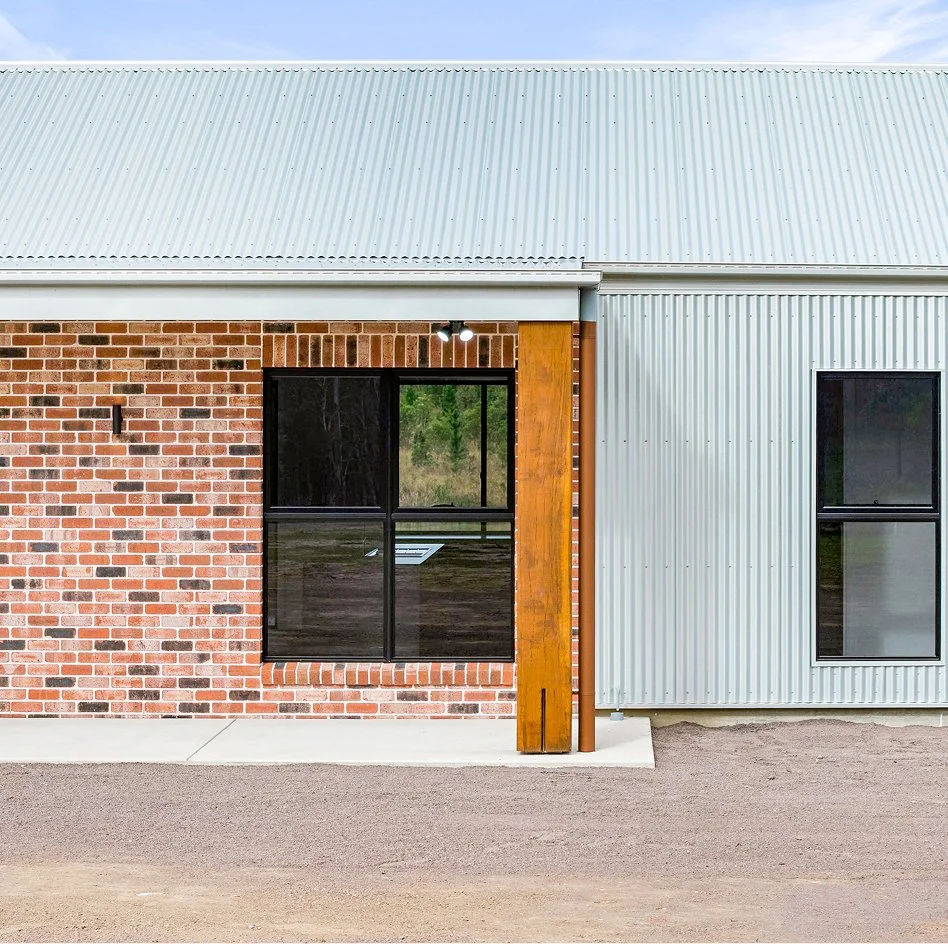
Passive House Explained
5 Principles for a more Comfortable, Energy-efficient Home
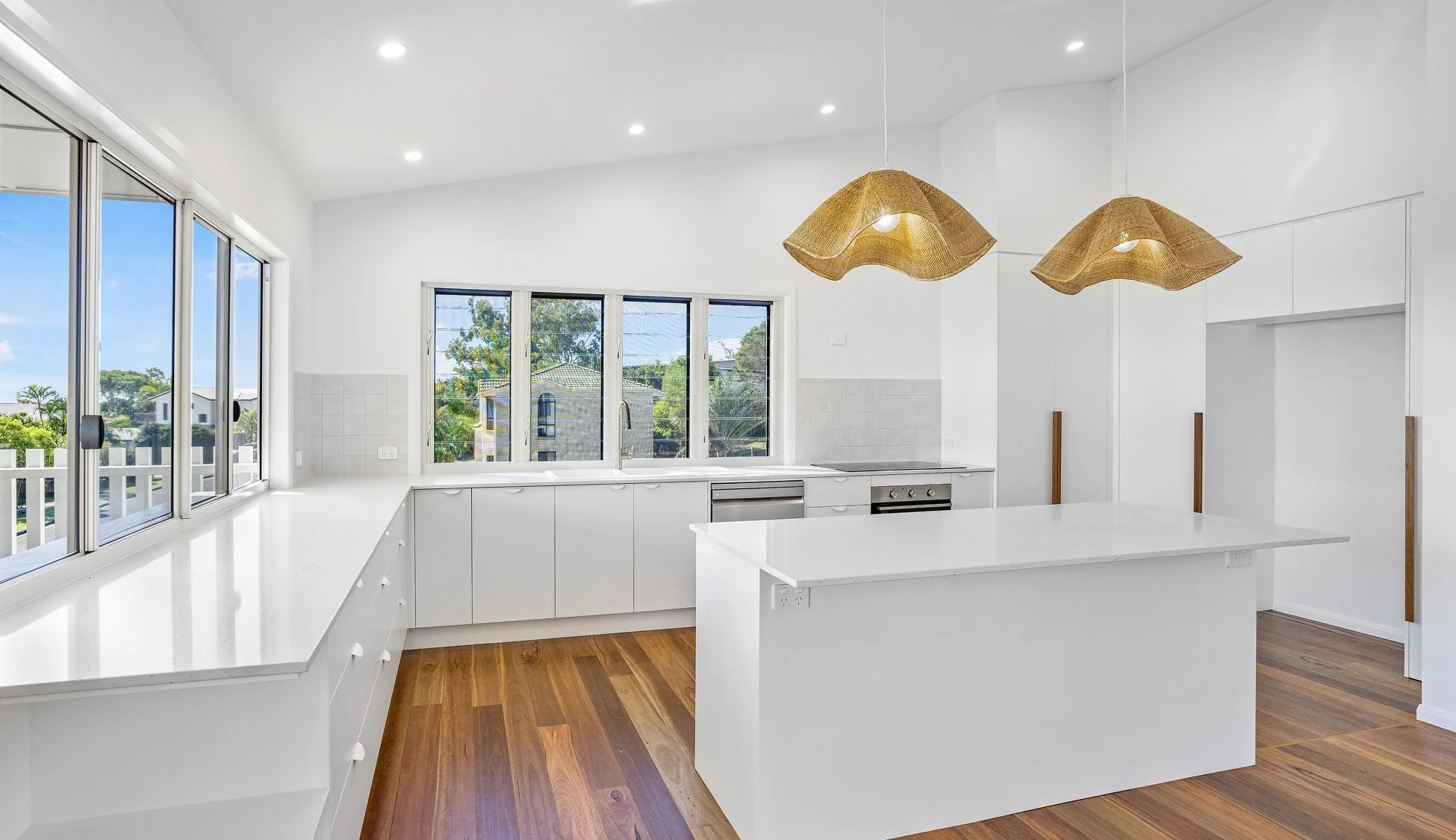
1. Insulation – Keep the heat out.
Think of insulation as a thermal blanket for your home.
Good insulation helps stop Queensland's heat getting inside and helps keep your home at a comfortable temperature.
But Passive House isn't just about putting insulation in the walls.
The insulation needs to form a continuous thermal envelope around the building.
The goal?
Less unwanted heat transfer = less energy needed to keep your home comfortable.
2. Thermal Bridges – Stop heat from taking the easy route.
A thermal bridge is a part of the building where heat can travel through more easily.
Think of it like a shortcut through your home's thermal protection.
Structural elements, junctions and poorly detailed connections can all create thermal bridges.
Passive House design aims to minimise these weak points.
That means paying attention to the details because small details can have a big impact on building performance.
3. Airtightness – Seal the gaps.
A well-insulated house can still perform poorly if air is leaking through cracks and gaps.
Passive House aims for a very airtight building envelope.
Why does that matter in Queensland?
Because you don't want hot, humid outdoor air sneaking into your carefully conditioned home.
A certified Passive House is tested with a blower door test to measure how airtight the building actually is. Not just designed airtight. Built and tested airtight.
4. High-Performance Windows & Doors
Windows are a major part of your home's thermal envelope.
Passive House uses high-performance windows and doors, combined with good design and appropriate shading.
For Queensland, that means thinking carefully about:
☀️ Solar exposure
🌳 External shading
🪟 Glazing performance
🧭 Orientation
🌡️ Indoor comfort
It's not simply about choosing "double glazing".
It's about designing the whole window system for the climate.
5. Fresh Air – Without Wasting Energy
Here's something that surprises people:
Passive House buildings are airtight but they still have fresh air.
Mechanical ventilation continuously brings fresh air into the home while removing stale air.
A heat/energy recovery system can recover energy from the outgoing air, helping maintain a more stable indoor environment.
And in Queensland, humidity management can be an important part of creating a comfortable indoor environment.
So, what is Passive House really about?
It's about treating the whole building as one system.
Insulation
🌡️ Thermal bridge reduction
💨 Airtightness
🪟 High-performance windows & doors
🌬️ Mechanical ventilation
And then considering the Queensland climate:
☀️ Sun
🌳 Shade
💧 Humidity
🧭 Orientation
🏠 Construction detailing
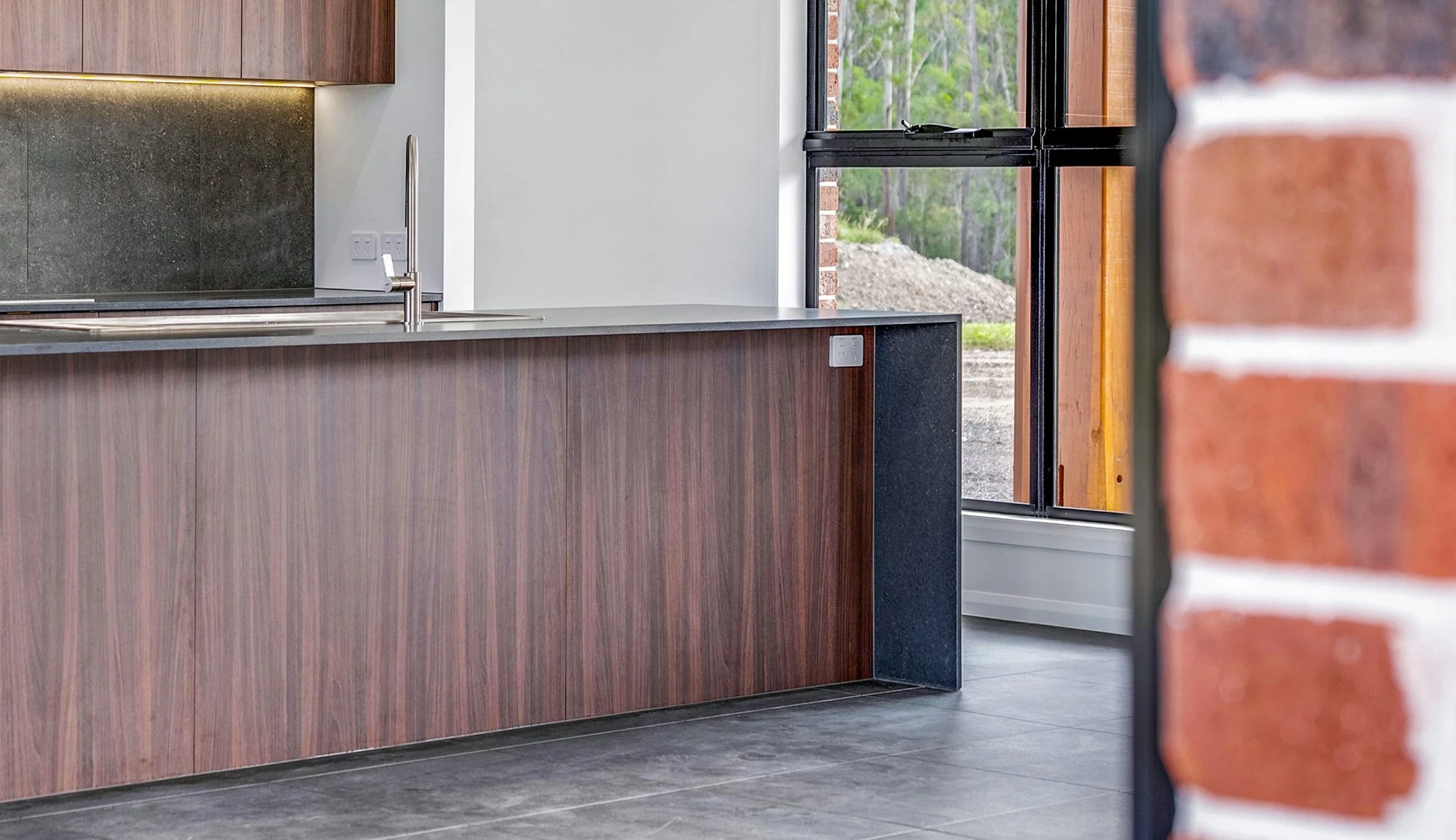
The result?
A home designed to be comfortable, healthy and highly energy-efficient.
Our team includes a Certified Passive House Tradesperson and we'd love to see more high-performance homes being built here in Queensland.
Thinking about building or renovating?
Let's talk about what Passive House could mean for your project.